
Our German Shepherd is not a dog with any health issues, she's happy, active, and otherwise completely normal. She is just picky. She'll eat slowly, poke around the bowl, and leave food behind more often than not, no matter what brand we put in front of her. After going through a stack of different bags over the years with no real pattern to what worked, we decided to actually test four options side by side instead of guessing, one to two months on each, to see what she'd eat consistently and what made sense for us to keep buying. She ended up loving all of them to some degree, but one pulled ahead for reasons beyond just her appetite.
Why we set it up this way
We weren't chasing a health problem this time, we wanted to compare food types rather than just switching flavors within kibble. That meant looking at convenience, whether it could be delivered instead of a store run, and price, since some of these are a lot more expensive than others. Testing four in a row, roughly a month or two each, gave us an actual comparison instead of a guess based on one bag.
The foods we tried, in order
-
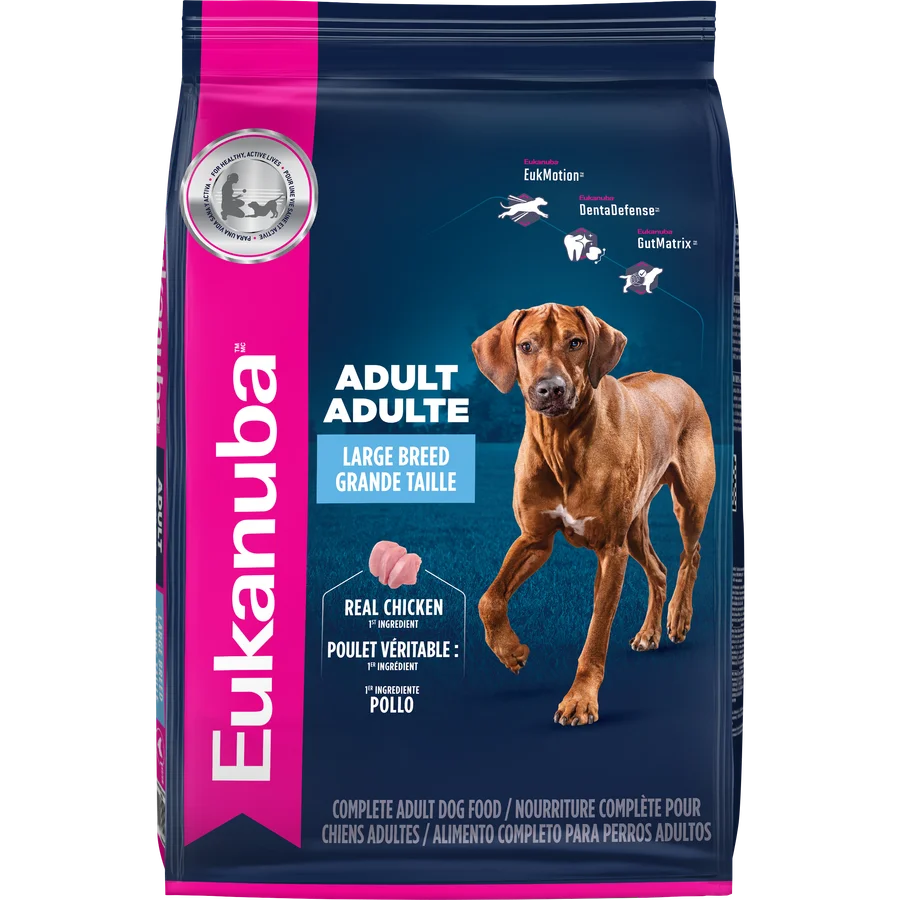
Eukanuba (chicken). We fed the Adult Large Breed chicken formula, which lists chicken first, followed by chicken by-product meal, corn, and chicken fat. It's a standard grocery and pet store kibble, available in bags up to 40 pounds, and one of the more affordable options we tried, priced around $75 to $83 for the large bag. She ate it fine, no real complaints, but nothing about it stood out to her either.
-
Royal Canin (chicken, German Shepherd formula). This one is bred specific, formulated for German Shepherds with a kibble shape designed for their longer muzzle. It lists chicken by-product meal, brown rice, and oat groats, with added glucosamine and chondroitin for joints. She did noticeably better with this one than the Eukanuba, which we'd guess comes down to the kibble shape and the fact that it's built around her exact breed.
-
The Farmer's Dog (turkey). This was our first non kibble option, a fresh, gently cooked recipe with turkey, chickpeas, carrots, broccoli, and spinach as the main ingredients, delivered frozen on a schedule. She ate this well, and the ingredient list is about as simple and recognizable as it gets. The catch was the freezer space and the cost, fresh food delivery isn't cheap, and portioning and thawing it added a step to our routine that the dry foods didn't need.
-
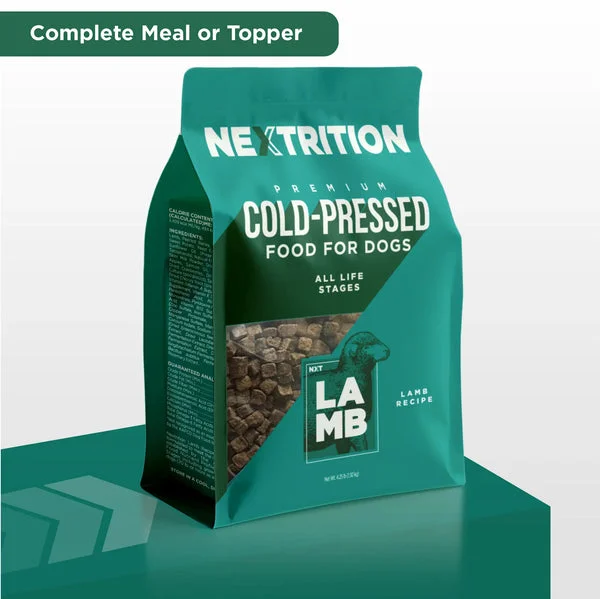
Nextrition (lamb). This is the one we stuck with. It's cold pressed rather than extruded or fresh cooked, and the lamb recipe is a single protein formula, which we liked given we were still somewhat comparing how she did across different proteins. The cold pressing seems to keep a stronger, more natural smell to the food compared to regular kibble, and that aroma is probably a big part of why she goes after it more eagerly than she did with the others. It also landed in a better spot for us on price and storage than the Farmer's Dog, no freezer, no thawing, just a bag in the pantry, while still feeling like a step up from a standard kibble in terms of ingredients.
Curious about the difference between formats? Our cold-pressed dog food overview takes a closer look at the process. If delivery is part of your decision, compare personalized dog food subscriptions.
What actually decided it
All four of these got eaten, which told us her pickiness probably isn't about one single trigger, more that she responds to fresher smelling, simpler food regardless of format. Nextrition ended up winning on the practical side once eating was no longer the deciding factor, it's easier to store and reorder than fresh food, it costs less than a weekly fresh delivery, and the aroma from the cold pressing seems to be doing a lot of the work in keeping her interested meal after meal.
Before trying a new option yourself, read our guide to switching dog food safely.
What I'd tell someone with a picky eater and no health concerns
If your dog is otherwise healthy and just uninterested in food, it might be less about any single brand and more about format and freshness. Give each option real time, a month is usually enough to tell if it's a pattern and not a fluke. And factor in your own routine the same way you'd factor in your dog's interest, since a food she loves that you can't keep up with logistically isn't a long term fix either.