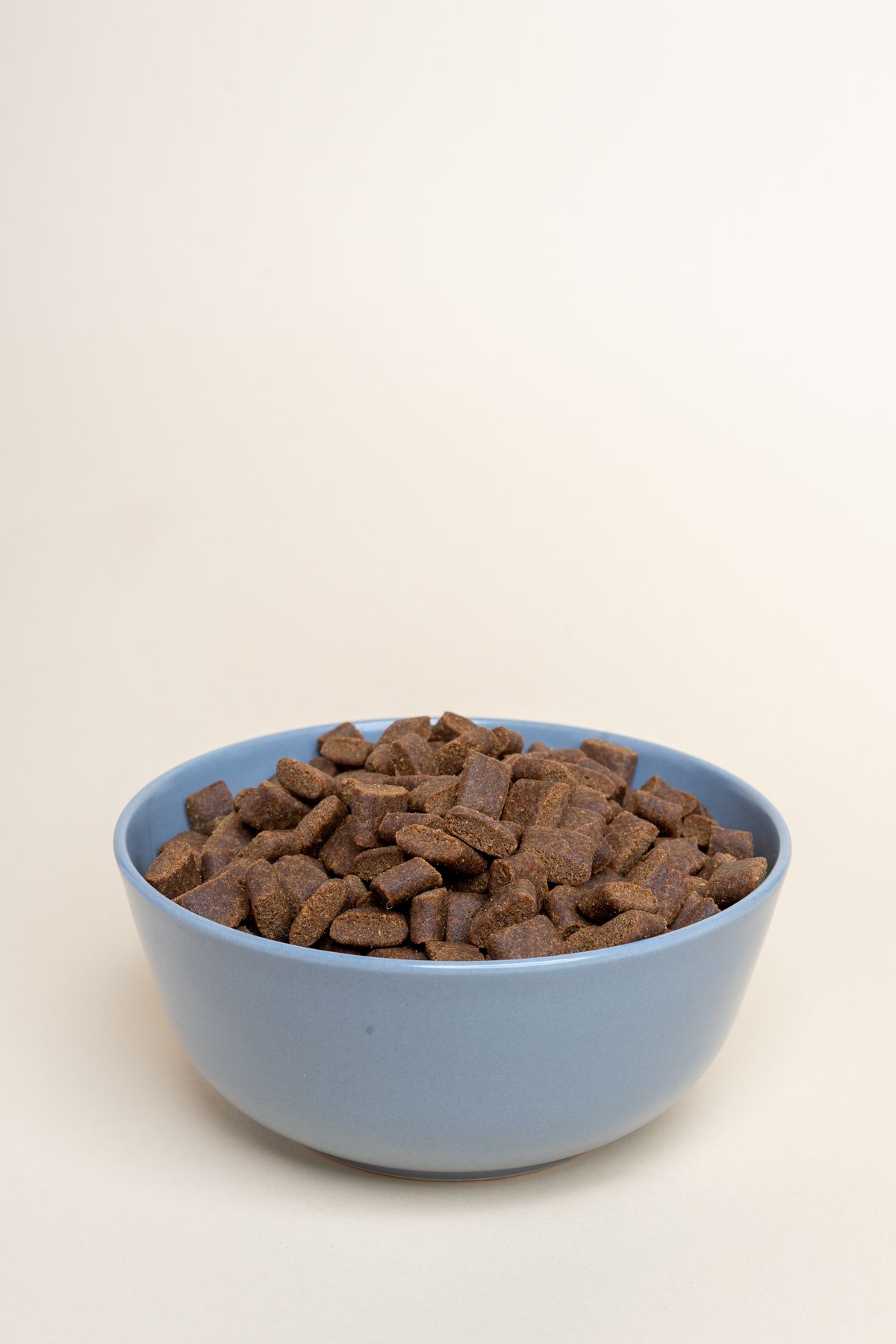
Cold pressed food for dogs sounds simple, but the difference is not just the bag or the shape of the pieces. Many owners swap foods too fast, feed the same volume as airy kibble, then blame the new recipe when stools get weird.
What matters is gentler processing, named proteins, and whether your dog actually settles into the food. Don’t guess from the front label.
Watch for:
-
Dense portions that need measuring, not eyeballing
-
Protein choices that suit skin, coat, and digestion
-
Firmer stools and calmer mealtimes
Feed with fewer question marks.
What Cold-Pressed Food for Dogs Actually Is
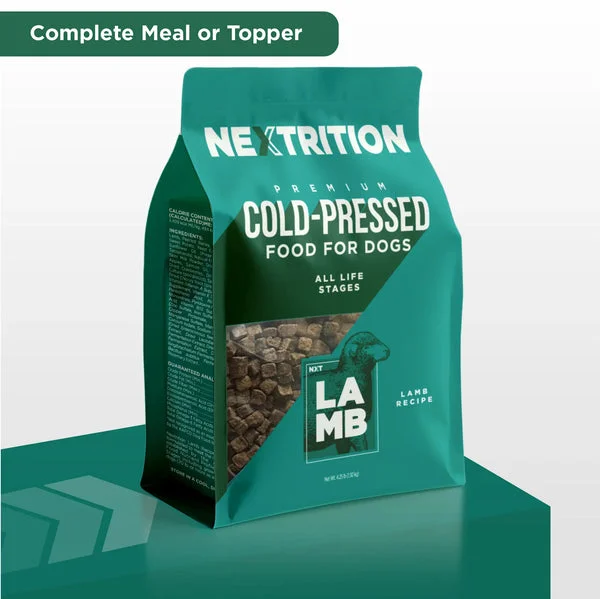
Cold pressed food for dogs is dry dog food. It just isn't made the same way as standard kibble.
Instead of blasting ingredients through high heat and pressure to create puffed pieces, cold pressed food compresses them at much lower temperatures into dense, compact bites. The result is shelf stable, easy to store, and familiar in daily use, but less airy and usually more nutrient-dense per piece.
That difference matters more than people think. A lot of owners aren't trying to leave dry food behind entirely. They just want something that feels less beaten up by processing.
In practice, premium cold pressed recipes usually lean on:
-
real meat as the lead ingredient
-
fruits and vegetables you can actually recognize
-
functional fibers and digestive support ingredients
-
clearly defined proteins, often single-protein recipes
It's still convenient food. It just starts from a different standard.
How Cold Pressing Works and Why the Process Matters
Here's the simple version. Ingredients are prepared, blended, and pressed into pieces at lower temperatures instead of being extruded into expanded kibble.
We care about that because the process changes the food before your dog ever eats it. Nextrition uses temperatures around 3x lower than conventional kibble production. That's not a cosmetic detail. Less aggressive heat can help protect delicate fats, natural aromas, amino acids, and other nutrients that don't love being cooked hard.
Standard kibble is often optimized for manufacturing efficiency and long shelf life first. Cold pressing takes a different route. It aims to be gentler on the ingredients.
That also explains why cold pressed pieces feel different in the hand. They're denser. Less puffy. More compact. Some owners notice it right away when they pour the bag.
The ingredient panel matters, but the process matters too. Heat changes food.
If you're the kind of owner who reads labels and still feels uneasy, this is usually the missing piece.
Cold Pressed vs Dry Dog Food: The Real Difference
The phrase "cold pressed vs dry dog food" causes a lot of confusion because cold pressed food is dry dog food. It's just a different kind.
The more useful comparison is cold pressed dry food versus standard extruded kibble. That's where the real differences show up.
| Factor | Cold pressed dry food | Standard kibble |
| Processing method | Lower-temperature pressing | High-heat extrusion |
| Texture and density | Dense, compact pieces | Puffed, airy pieces |
| Ingredient integrity | Generally better preserved | More heat stress during production |
| Digestion experience | Often gentler breakdown | Can feel heavier for some dogs |
| Best fit | Owners wanting dry-food ease with less processing | Owners mainly prioritizing cost or familiarity |
The day-to-day issues owners care about tend to cluster around a few things:
-
Digestibility: cold pressed pieces usually break down more gently than expanded kibble.
-
Palatability: lower heat can keep more natural smell and taste.
-
Stool quality: many owners look here first because it's visible and hard to fake.
-
Density: serving sizes can be smaller than people expect.
For us, the appeal is pretty straightforward. If raw feels impractical but standard kibble feels too processed, cold pressed food for dogs sits in the middle in a way that actually makes sense.
The Nutritional Value of Cold Pressed Dog Food
The nutritional value of cold pressed dog food isn't just a marketing line. It comes back to how the ingredients are handled from the start.
When you use lower temperatures, you may preserve more heat-sensitive nutrients, natural fats, and flavor compounds than you would with harsher extrusion. That doesn't mean every cold pressed formula is automatically good. It means good ingredients have a better chance of arriving in the bowl in better shape.
That's why ingredient quality still matters. Real meat, fruits, vegetables, and useful fibers give the process something worth preserving. Fillers don't suddenly become better because they were pressed gently.
Owners usually notice nutritional quality in practical ways:
-
steadier energy instead of big swings
-
easier digestion
-
firmer, more predictable stools
-
better use of the food, not just more volume fed
Nutrient density is part of this too. Compact pieces can carry a lot of whole-food input in a smaller serving. Our all-natural recipes, for example, concentrate over 12 pounds of whole fresh ingredients into a 4.5 lb bag. That includes real meat first, fruits and vegetables, natural ingredients, and Rocky Mountain water. It tells you something important: smaller bag, heavier nutritional lift.
Dense food isn't a gimmick. It usually means the bowl looks different from what you're used to.
The Biggest Benefits of Cold Pressed Dog Food
The benefits of cold pressed dog food show up most clearly in routine feeding, not in dramatic claims. This is about what happens week after week.
Digestive support
Many dogs do better when food is less expanded and less aggressively processed. Cold pressed pieces tend to break down more gently, which can help dogs prone to gas, loose stools, or that vague "his stomach is just touchy" pattern owners know too well.
Functional fibers also help. When the formula is built well, you often see firmer stools and less mess fast. Sometimes by the second or third day.
Gut health and immune support
About 70% of a dog's immune system resides in the gut. So when digestion is off, it rarely stays just a poop problem.
Food that supports the gut gives the body a better shot at absorbing nutrients well and maintaining day-to-day resilience. That's one reason we care so much about gentler processing in the first place.
Flavor and aroma
Lower-temperature processing can preserve more natural scent and taste. That matters for picky eaters. Dogs don't read ingredient decks. They use their nose first.
Skin and coat support
When proteins and natural fats stay in better shape, some dogs show it in their skin and coat. Softer coat, less dryness, less dullness. Not magic. Just better raw material going in.
Feeding convenience
This is still dry food. It stores easily, portions cleanly, travels well, and doesn't ask you to reorganize your freezer.
Owner confidence
A simpler ingredient approach reduces label fatigue. You shouldn't need a decoder ring to feed your dog.
Why Gut Health Is Central to the Cold-Pressed Conversation
If you're serious about your dog's health, gut health stops being a side topic pretty quickly.
The gut handles digestion, nutrient absorption, stool quality, and a big part of immune signaling. When it isn't working well, the signs are usually mundane at first. Loose stools. Gas. Appetite that comes and goes. A dog that seems a little off after meals. People dismiss this stuff for months.
We don't.
Cold pressed feeding lines up with gut support because it usually brings together a few things that matter at the same time:
-
gentler processing
-
better ingredient integrity
-
natural fibers
-
recipes built for easier digestion
This is also why owners shopping for digestive support shouldn't choose blindly from the pet store aisle. A dedicated cold-pressed dog food collection or a dog food for gut health collection makes more sense than guessing based on bag design.
The visible signs are often simple:
-
firmer stools
-
less gas
-
steadier appetite
-
less post-meal discomfort
-
more regular bathroom habits
Small changes here are not small. The gut is upstream of a lot.
Cold Pressed Dog Food for Allergies and Sensitive Dogs
Let's keep this honest. Cold pressed dog food for allergies can help in some cases, but cold pressing itself does not cure allergies.
The benefit is usually that these foods come with cleaner, simpler recipes that are easier to evaluate. That's a big deal when you're trying to figure out what your dog tolerates.
It also helps to separate three different issues:
-
true food allergies, which involve an immune response
-
food intolerances, where a dog reacts poorly without a classic allergy
-
general digestive sensitivity, which is common and often less dramatic
For sensitive dogs, the format can make sense because you often get defined protein sources, fewer filler ingredients, and gentler processing. That combination is easier to work with than mystery-meat kibble loaded with extras.
Protein choice matters more than people want it to. Some practical examples:
-
All-Natural Lamb Recipe fits owners looking for a lamb-based, digestion-supportive option, especially for sensitive stomachs.
-
All-Natural Salmon Recipe makes sense for dogs dealing with itchy skin, dull coats, or gut concerns where a fish-based formula is worth trying.
-
Chicken and beef can still be strong everyday options if your dog already tolerates them well.
If your dog has persistent itching, recurring ear issues, vomiting, or chronic diarrhea, don't self-diagnose your way through six bags of food. That's vet territory, especially if an elimination diet is needed.
Which Dogs Tend to Benefit Most From Cold-Pressed Feeding
Not every dog needs cold pressed food, and we're not interested in pretending otherwise. But some dogs are better candidates than others.
The pattern usually looks like this:
-
dogs with frequent gas or inconsistent stool
-
dogs that never seem fully comfortable on standard kibble
-
picky eaters who need more natural aroma to stay interested
-
dogs with skin and coat concerns, especially where salmon-based nutrition may help
-
small dogs that need more nutrition per bite
-
senior dogs whose digestion isn't as forgiving as it used to be
-
active dogs that need efficient fuel without a lot of filler bulk
There's also a quieter group. Owners who want dry-food convenience but don't want to keep feeding highly processed kibble just because it's familiar. That's a completely reasonable place to land.
Still, medical nutrition is its own category. Dogs with kidney disease, pancreatitis, severe allergies, or other specific conditions need decisions guided by a veterinarian.
For a structured way to compare the bag itself, read our pet food label guide. Our protein digestibility guide also explores the ingredient choices behind different recipes.
How to Evaluate the Best Cold Pressed Dog Food Brands
When people search for the best cold pressed dog food brands, they usually don't need a popularity contest. They need a filter.
Start with the basics and be a little skeptical. Front-of-bag language is cheap. The ingredient panel and the process story tell you more.
Here's the checklist we think is worth using:
-
clearly named animal proteins
-
real meat high on the ingredient list
-
a plain-English explanation of how the food is made
-
recognizable supporting ingredients like fruits, vegetables, and fibers
-
no vague fillers, artificial colors, or unnamed by-products if the brand claims to be premium
-
a recipe that fits your dog's life stage and sensitivities
For sensitive dogs, single-protein formulas and shorter ingredient lists are easier to work with. That's just operationally cleaner. You can tell what's helping and what's not.
Gut-friendly additions are worth watching too. Pumpkin, chicory root, prebiotic fiber, probiotics, and postbiotics can matter if your dog struggles with stool quality or digestion.
Our approach follows that logic: single-protein options in chicken, beef, lamb, and salmon, with a focus on digestive support, nutrient retention, and natural ingredients for owners who want a better dry-food standard.
Before buying any brand, ask:
-
What protein is actually leading this recipe?
-
Does the company explain why its processing method matters?
-
Can I tell what problem this food is trying to solve?
If the answers are fuzzy, keep moving.
Our detailed guide to switching dog food safely covers gradual changes and portion measurement. To compare ordering options, explore recurring dog food delivery services.
How to Switch to Cold Pressed Dog Food Without Upsetting Your Dog’s Stomach

Even if the new food is better, your dog's gut still needs time to adjust. This is where impatient owners create avoidable problems.
A simple 5 to 7 day transition works well for most dogs:
During the switch, pay attention to:
-
stool changes
-
gassiness
-
eagerness to eat
-
water intake
-
scratching or signs the recipe isn't the right fit
One thing that trips people up: cold pressed food is denser than airy kibble, so don't eyeball portions based on habit. Follow the feeding guidance on the bag.
If you want a lower-risk starting point, the Trial Variety Pack lets you compare chicken, beef, lamb, and salmon before committing to a full bag. Trial packs also work well as toppers for cautious transitions or picky dogs that need a softer introduction.
Common Misconceptions About Cold-Pressed Dog Food
A few bad assumptions keep coming up, so let's clear them out.
"Cold-pressed means raw."
It doesn't. It's dry, shelf-stable food. The philosophy is closer to raw-inspired feeding than standard kibble, but it is not raw.
"All dry food is basically the same."
It isn't. Ingredient quality and processing method can change digestion, stool quality, palatability, and nutrient retention in very real ways.
"If it's dense, it must be too rich."
Density and poor digestibility are not the same thing. Dense food often just means less air and more actual food per piece.
"It's only for dogs with problems."
Not true. A lot of owners choose it proactively because they want a less processed daily diet.
"If the new food is better, switch overnight."
Bad idea for most dogs. Better food still needs a gradual handoff.
"Premium food only changes appearance."
No. Coat matters, sure. But digestion, nutrient absorption, immune support, and daily energy are the real conversation.
How to Decide if Cold-Pressed Food Is the Right Next Step for Your Dog
You don't need a perfect answer. You need a clear enough one.
Cold pressed food for dogs is worth considering if you're unhappy with standard kibble ingredients, your dog has mild digestive issues, you want a dry food with more whole-food credibility, or your dog needs something more appealing and gut-friendly day to day.
Before choosing a recipe, ask yourself:
-
What protein does my dog usually do best on?
-
Is my main goal digestion, coat support, or a cleaner ingredient list?
-
Do I want to test with trial packs first?
-
Do I want one-time ordering or repeat delivery so I don't run out?
If you want less guesswork, a personalized meal plan helps narrow the right recipe and portioning. If consistency is the bigger issue, subscription delivery solves a boring but real problem: forgetting to reorder until the bag is nearly empty.
Good nutrition is often less about dramatic upgrades and more about choosing a better default.
Conclusion
Cold pressed food for dogs gives health-conscious owners a middle path that makes practical sense. You keep the convenience of dry food, but with gentler processing and a more natural nutritional profile than standard kibble usually offers.
The main ideas are pretty simple:
-
lower-temperature production can help preserve ingredient integrity
-
the benefits of cold pressed dog food often show up in digestion, gut health, nutrient absorption, and palatability
-
the right formula depends on your dog's protein tolerance, goals, and how carefully you manage the switch
If you're considering it, start with your dog's main need. Pick the protein that fits that need best, introduce it gradually, and watch the basics closely. Stool quality, appetite, comfort, coat, energy. That's where the answer usually shows up.