
Finding dog food that firms up stools gets messy fast. Plenty of bags promise a “sensitive stomach” fix, yet do little beyond changing the label. You need food that supports digestion without loading the bowl with filler (or guesswork).
The stronger options earned their place through digestibility, useful fiber, fat control, or gentler processing. Not every loose stool needs a prescription diet. But chronic problems need more than a prettier kibble bag.
We cut this to eight options worth your attention.
1. Nextrition Cold-Pressed Dog Food
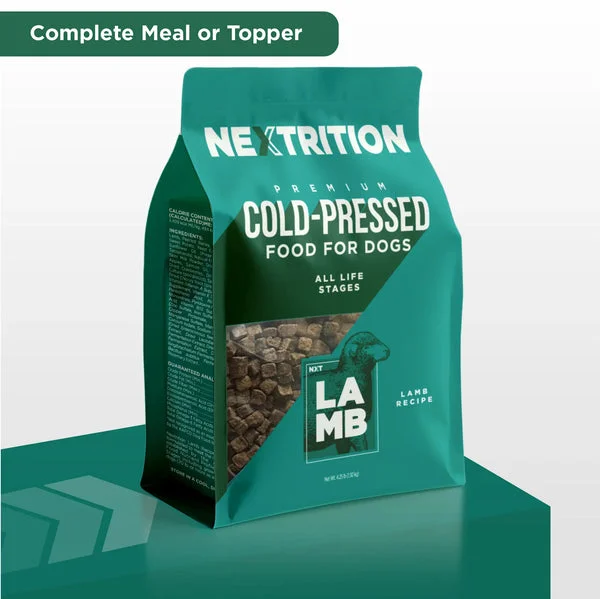
If your dog is otherwise healthy but keeps producing soft, sloppy stools, this is usually where we'd start. Not with a prescription bag. Not with a dozen supplements. With a better everyday food that puts digestion first.
Nextrition makes sense when the problem looks nutritional, not medical. Our cold-pressed process uses lower temperatures than standard kibble production, which matters more than most labels let on. High heat can be rough on delicate nutrients. We take a gentler route so more of the good stuff stays intact, and that gives many dogs a steadier digestive experience.
A few details matter here:
We built it for regular feeding, not short-term damage control. That's an important distinction. If your dog has recurring soft stools, mild digestive sensitivity, or just seems to do poorly on harsh, overprocessed kibble, cold-pressed food can be a smarter first move than jumping straight into a veterinary formula.
The other practical piece is routine. You can build a personalized meal plan instead of guessing portions and swapping bags every few weeks. That alone solves a lot of chaos. Loose stool often gets worse when owners keep changing foods out of frustration.
Better stools usually come from better consistency, not more panic.
This isn't positioned as a therapeutic food for complex GI disease. If your dog has ongoing vomiting, weight loss, or diagnosed intestinal issues, that's a different conversation. But for the healthy dog with chronically soft stools, picky eating, or touchy digestion, this is a strong fit and a more natural-feeling one.
2. Royal Canin Gastrointestinal High Fiber
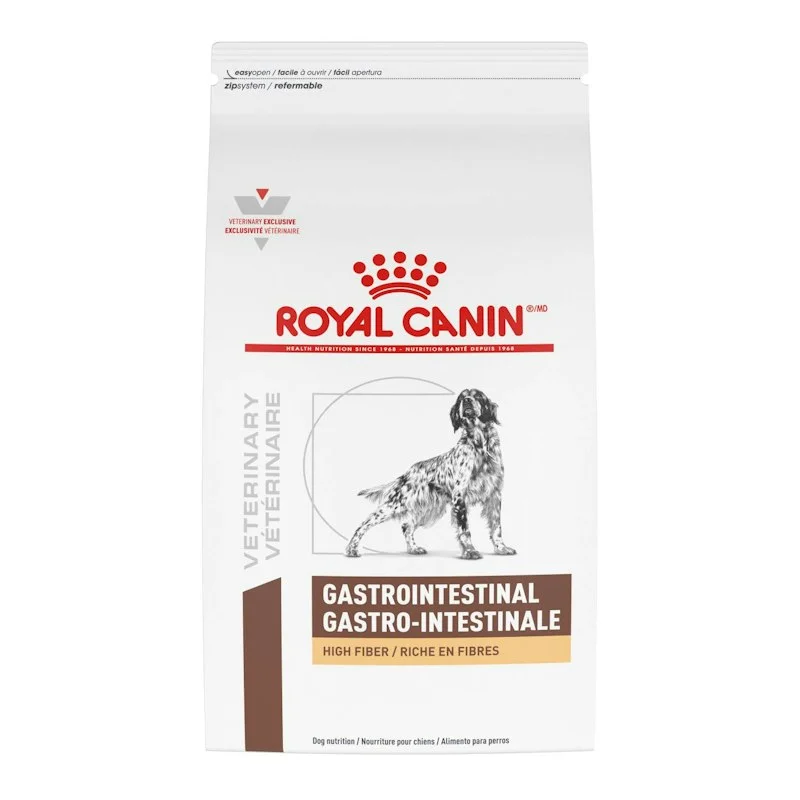
Some dogs don't need a nicer ingredient panel. They need stool regulation, plain and simple. That's where a high-fiber veterinary diet enters the picture.
Royal Canin Gastrointestinal High Fiber is more targeted than a general "sensitive stomach" food. It's built to regulate intestinal transit and improve stool quality, using a fiber-rich formula along with highly digestible proteins, prebiotics, and EPA and DHA. That's a more clinical setup, and for the right dog, clinical is exactly the point.
Here's when this type of food makes more sense:
Compared with cold-pressed or mainstream premium foods, this feels less natural and more medical. Some owners resist that. We get it. But if the issue is persistent and your vet suspects fiber balance is the missing piece, a formula like this can be more useful than trying three "healthy" retail foods in a row.
One operator-level note: high fiber isn't automatically better. Too much fiber in the wrong dog can create a different mess. This option is best used when there is a reason to go fiber-forward, not just because the stool is soft.
3. Hill’s Prescription Diet Gastrointestinal Biome Dry
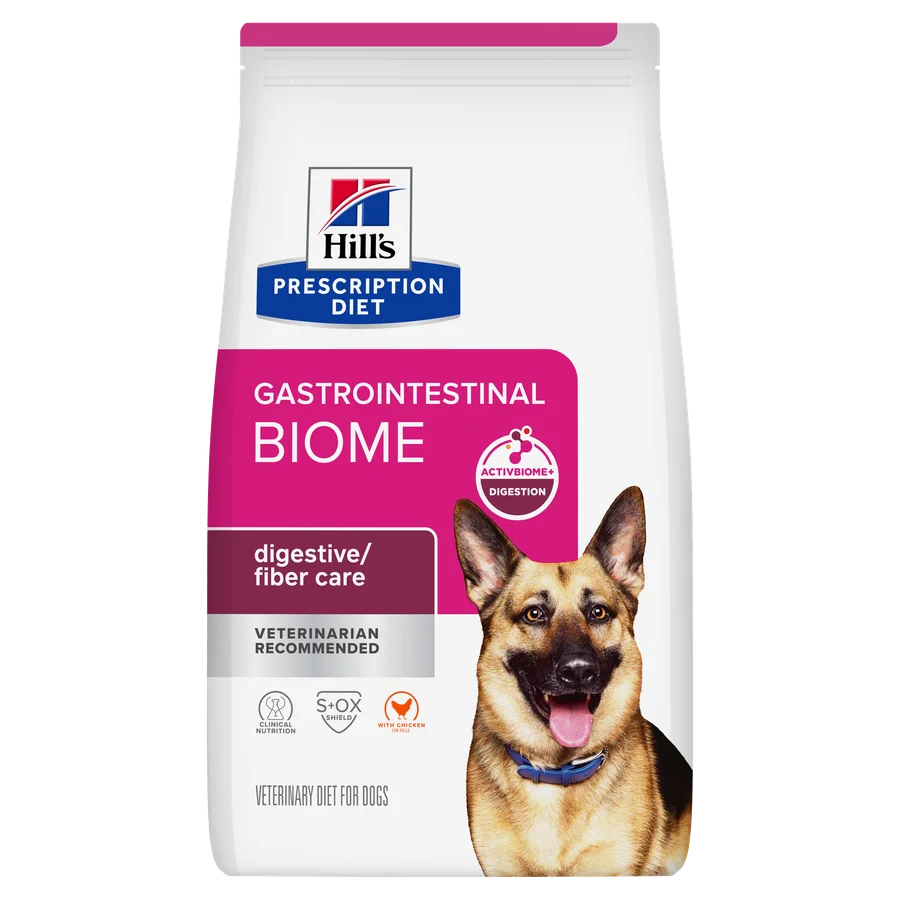
This one leans hard into the microbiome angle, and in some cases that's the right call. Loose stools aren't always about food quality in the broad sense. Sometimes the gut environment itself needs more direct support.
Hill's Prescription Diet Gastrointestinal Biome Dry is built around fiber, including psyllium and prebiotic-rich sources, with the goal of producing firmer, better-formed stools. That's more specific than a shelf formula that simply says "digestive support" on the front.
Where it earns its place
Households often choose this when they've already tried ordinary sensitive stomach foods and the stool still isn't right. It also helps that it's dry food. Long-term portioning is simple, storage is easy, and everyone in the house can feed the dog the same way without much friction.
It sits in the same prescription conversation as Royal Canin High Fiber and Purina EN Fiber Balance, but the microbiome-centered positioning will appeal to owners who want a more targeted explanation for why the food may help.
That said, this isn't a casual first switch. If your dog just had two soft stools after getting too many treats over the weekend, this is overkill. But for ongoing digestive disruption under veterinary care, it belongs on the shortlist.
4. Purina EN Gastroenteric Fiber Balance
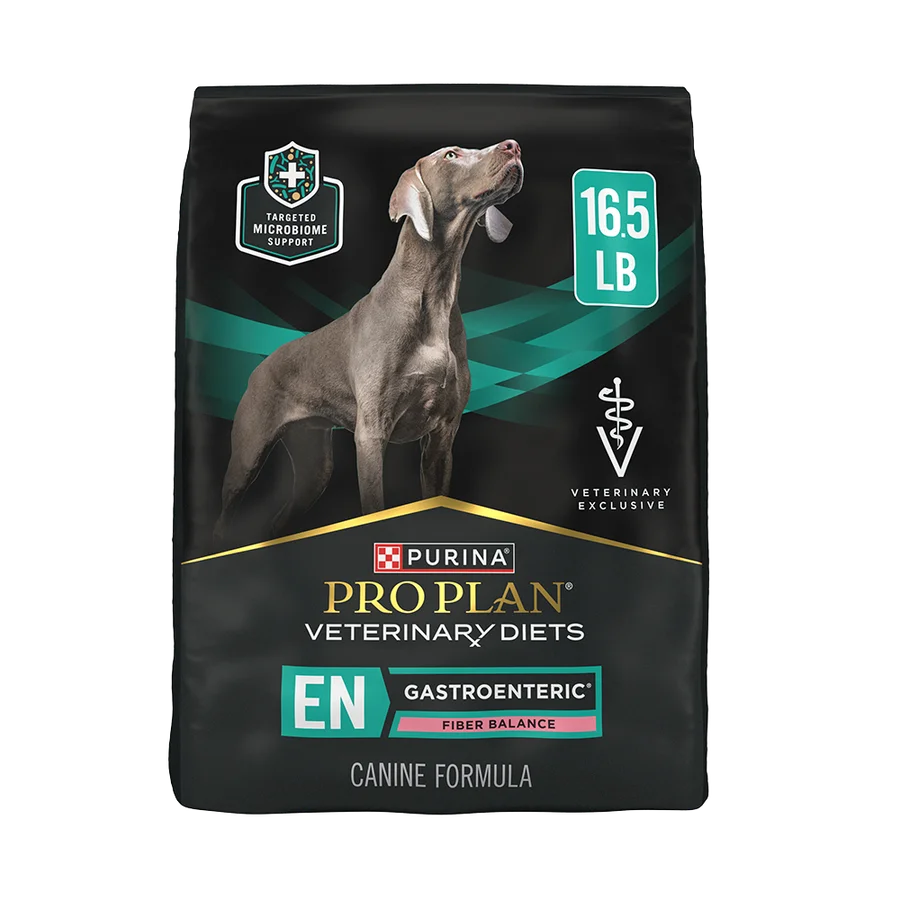
Balanced fiber sounds boring. For a dog with chronic soft stool, boring is good. Boring means stable.
Purina EN Gastroenteric Fiber Balance is another veterinary diet made for digestive support, with a specific focus on fiber balance rather than simply pushing fiber as high as possible. That distinction matters. The shelf is full of owners chasing crude fiber numbers without asking whether the overall formula is actually easier on the gut.
This option fits the middle ground well. It's part of the same therapeutic category as Hill's Gastrointestinal Biome Dry and Royal Canin High Fiber, but some owners land here because they want a straightforward prescription dry food from a major GI diet line without overcomplicating the choice.
A few situations where it makes sense:
The tradeoff is obvious. This is not for someone shopping with a minimally processed, natural-ingredient mindset. It's a troubleshooting food. We wouldn't confuse those two jobs. But if your dog needs a structured GI formula and you want dry-food convenience, it holds its place.
5. Royal Canin Gastrointestinal Low Fat Frozen Dog Food
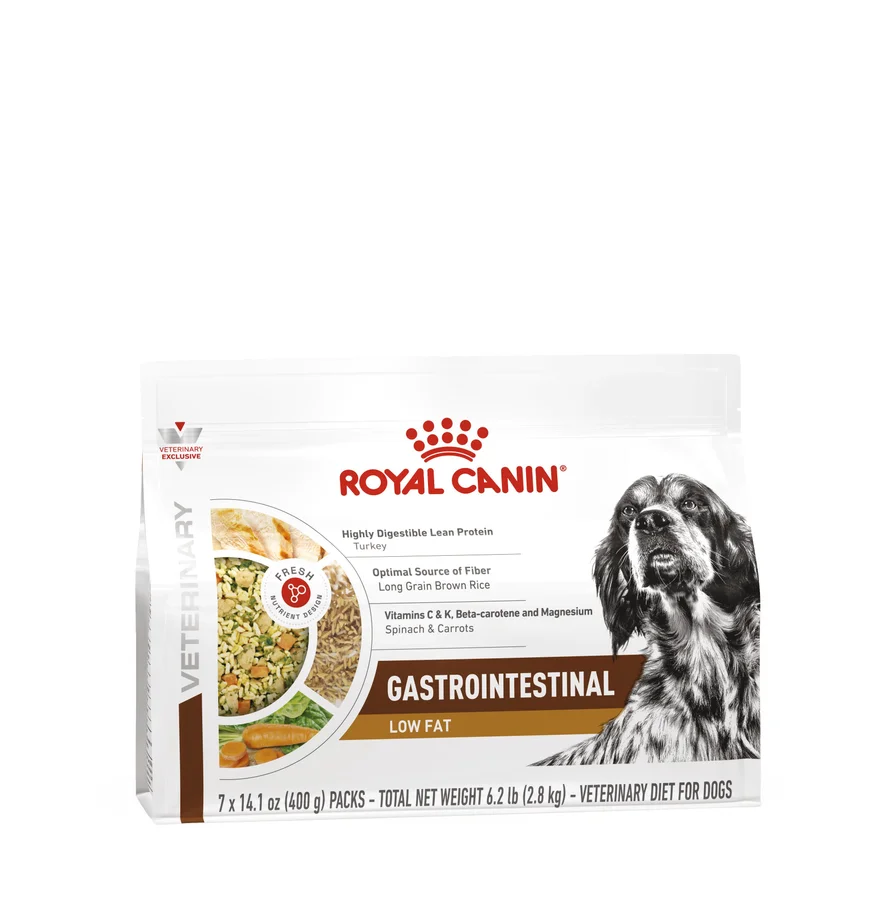
Sometimes the stool problem isn't about fiber first. It's about fat tolerance. That's easy to miss.
Royal Canin Gastrointestinal Low Fat Frozen Dog Food is built for adult dogs who struggle with richer foods and need digestive support that also aims for healthy, firm stools. The format is different from most veterinary options in this roundup. It's frozen, more fresh-food-like, and that can matter for acceptance, especially with picky dogs.
The formula uses lean turkey, multiple fiber sources, omega-3s from fish oil, and ingredients like spinach and carrots. That's a different profile from a high-fiber-only GI formula. It's trying to support digestion while keeping fat in check, which can be the deciding factor for dogs whose stools go loose on richer diets.
The real tradeoff is convenience
Frozen therapeutic food asks more from the owner:
That doesn't make it worse. It makes it less forgiving. If your household is inconsistent, storage and prep issues can become the reason the plan fails. Still, for the adult dog with known fat sensitivity who turns up their nose at dry food, this can be a smart way to stay therapeutic without relying on kibble.
6. Royal Canin Veterinary Diet Gastrointestinal Low Fat Adult Dry Dog Food
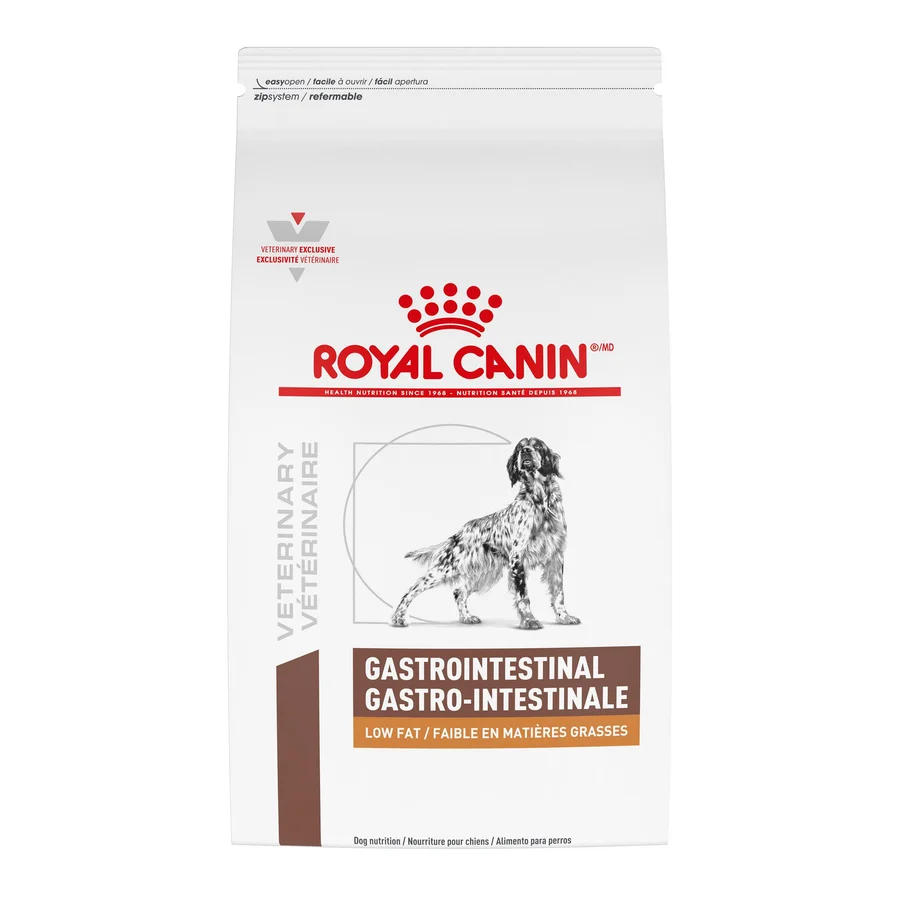
This is the low-fat logic in a simpler format. Same problem category, easier routine.
Royal Canin Veterinary Diet Gastrointestinal Low Fat Adult Dry Dog Food is meant for dogs that may have trouble digesting or tolerating fat, while also supporting stool quality through dietary fibers, prebiotics, and omega-3s including EPA and DHA. It also leans into palatability, which matters more than brands like to admit. The best GI formula in the world doesn't help if your dog won't eat it by day three.
Compared with the frozen Royal Canin option, this one wins on storage and ease:
It's more targeted than a general sensitive stomach food and less fiber-specific than Royal Canin Gastrointestinal High Fiber. That's the right spot for dogs whose issue points toward fat sensitivity, not necessarily transit regulation alone.
We'd look here for soft stools that get worse on richer foods, especially in households that need a shelf-stable veterinary diet they can feed consistently. If the stool issue is mild and there is no reason to suspect fat is involved, there are less restrictive ways to start.
7. Hill’s Science Diet Sensitive Stomach & Skin
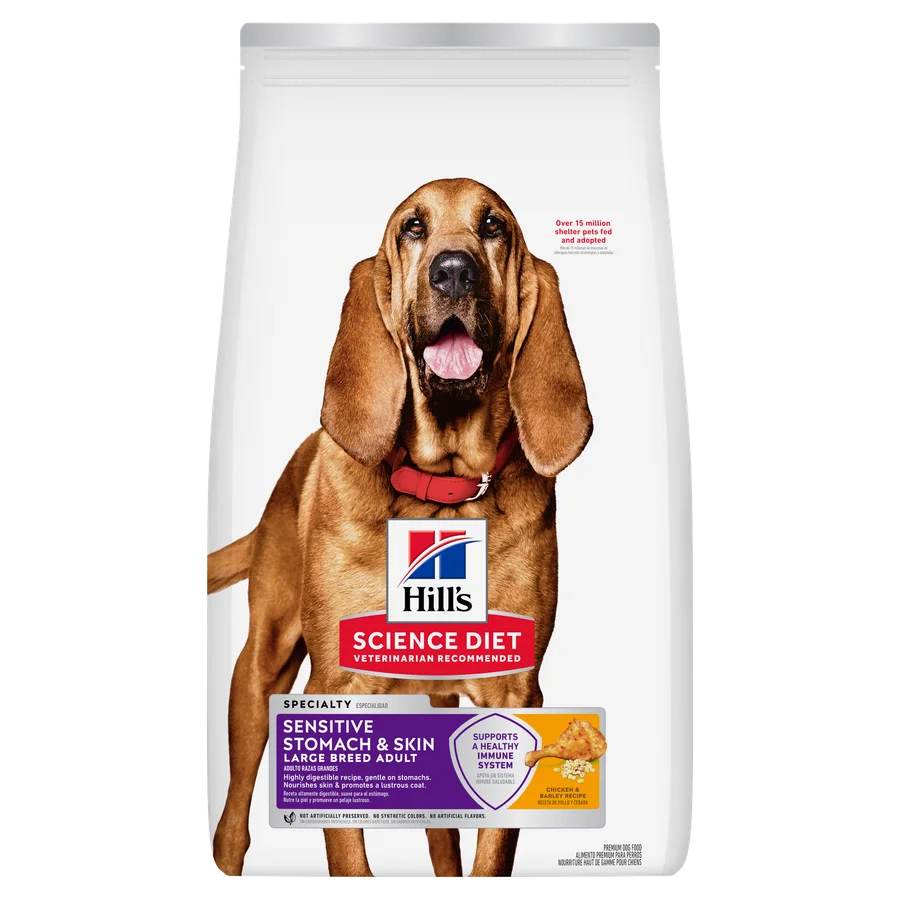
Not every dog with soft stool needs a prescription bag. Sometimes you just need a cleaner first test.
Hill's Science Diet Sensitive Stomach & Skin is a mainstream non-prescription option for adult dogs with mild digestive sensitivity, especially when gut issues show up alongside skin or coat concerns. It's easier to access than the veterinary foods in this roundup, and that matters for owners who want to try a sensible retail formula before going fully clinical.
This is broader than Hill's Prescription Diet Gastrointestinal Biome Dry. It isn't trying to solve a specific GI pattern with the same precision. It's built for day-to-day support. That's both its strength and its limit.
Good first move. Not always the last move.
If your dog has occasional soft stools, no major red flags, and some overlap with skin sensitivity, this can be a reasonable place to start. If stools stay loose, urgency continues, or the dog only improves halfway, it's usually time to stop treating it like a small nuisance and move into a more targeted food category.
8. I and Love and You Nude Super Food
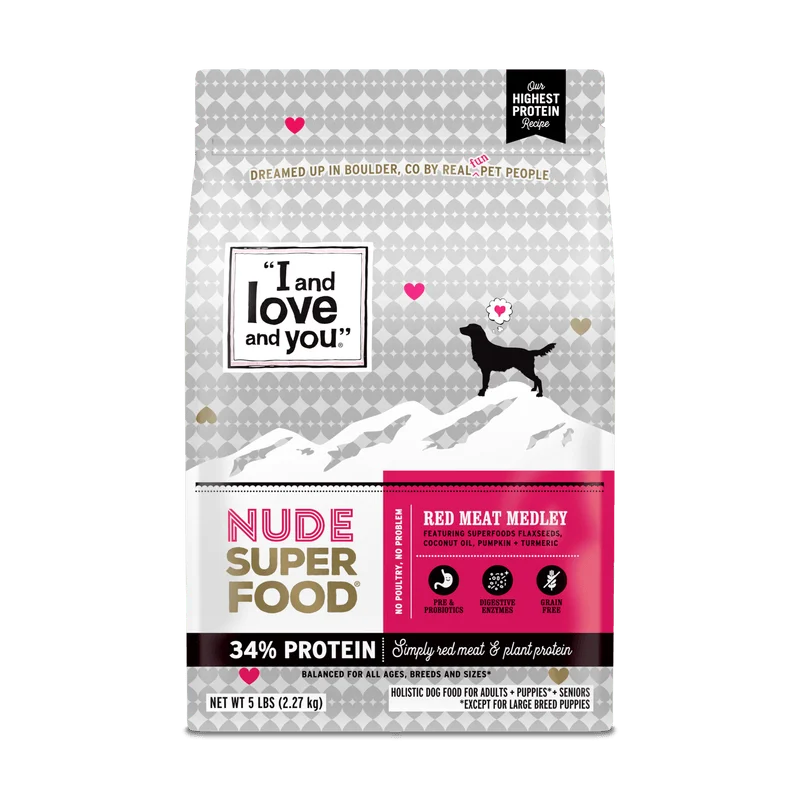
This is the most lifestyle-oriented option in the group. It's a mainstream dry food with superfood positioning, and it tends to attract owners who want something more thoughtful than standard kibble without stepping into prescription territory.
For mild digestive sensitivity, that can be enough. For chronic loose stools, probably not.
The stool-firming case here is more indirect than with Nextrition or the veterinary GI diets. It shows up in these conversations because some dogs with lighter stomach sensitivity do better when moved off basic, low-grade formulas and onto a more ingredient-conscious dry food. That can improve things. It just isn't a direct GI tool in the way the stronger options above are.
This one fits if you want:
The limitation is pretty clear. If you're specifically asking what dog food makes stools firmer because the problem keeps repeating, this wouldn't be our first pick. It's better viewed as a broad wellness food for mild cases, not a focused answer for stubborn stool issues.
To compare the ingredient side of these options, explore our guide to proteins that dogs may find easier to digest. For a closer look at food formats, read what cold-pressed dog food is.
How to Choose the Right Dog Food That Firms Up Stools
Stool quality is daily feedback. It tells you how well your dog's gut is handling food, not just how annoying cleanup will be.
The first question isn't "which bag is best?" It's "why are the stools soft in the first place?" Once you answer that, the list gets much easier to narrow down.
Four practical pathways
For mild soft stools in otherwise healthy dogs, start with premium everyday digestive support. That's where a dog food that firms up stools through gentler processing and steadier ingredients makes sense. Nextrition fits here well.
For chronic loose stools or recurring flare-ups, look harder at veterinary high-fiber foods like Royal Canin Gastrointestinal High Fiber, Hill's Gastrointestinal Biome Dry, or Purina EN Fiber Balance. These are for dogs who need more than a smarter retail food.
For suspected fat sensitivity, don't force a fiber-first answer. A low-fat GI food may be the better match, especially if stools worsen after richer meals or fatty treats. The two Royal Canin low-fat options were built for that lane.
For dogs already under veterinary care, let the diagnosis guide the category. Owner preference still matters, but the food should match the digestive problem, not the marketing language.
What to weigh before you buy
The trendiest label rarely wins. The right match does.
What Dog Food Makes Stools Firmer
What dog food makes stools firmer? Usually, the food your dog can digest cleanly and tolerate consistently. That's less glamorous than most marketing, but it's the truth.
Firmer stools tend to come from five things working together:
Cold-pressed food can help when you want everyday gut support without jumping to a therapeutic diet. The gentler processing and whole-food style ingredients are a better fit for many mildly sensitive dogs than heavily processed kibble.
High-fiber veterinary diets make more sense when transit regulation and stool quality are the actual target. Low-fat GI diets earn their place when richer foods trigger trouble. Sensitive stomach formulas sit below those on the ladder and work best for milder cases.
It's not always "more fiber"
This is where people get tripped up. More fiber is not the universal answer to soft stools. Some dogs need better digestibility. Some need less fat. Some need a more structured microbiome-and-fiber approach under veterinary care.
If you give the wrong dog the wrong logic, you can stay stuck for months.
Signs the current food may be the problem
Watch for patterns like these:
Those clues usually mean the gut isn't handling the formula well, even if the bag looks impressive.
When food isn't enough
If soft stools come with vomiting, weight loss, blood, pain, appetite changes, or long-running flare-ups, diet alone may not solve it. That's when veterinary guidance becomes the better next move. Food is powerful, but it isn't magic.
Once you have a shortlist, our guide to switching dog food safely walks through the transition process.
Common Mistakes Dog Owners Make When Trying to Firm Up Stools
Most stool problems get dragged out by good intentions and bad process. We see the same mistakes over and over.
Switching too fast is near the top. Owners panic after three loose stools, open a new bag, then switch again before the gut has time to settle. A transition needs room to work.
Another mistake is shopping by crude fiber alone. Fiber matters, but digestibility and fat tolerance matter too. A dog struggling with fatty food won't be fixed by a random high-fiber formula.
A few other common misses:
Format fit gets overlooked too. Frozen therapeutic food asks for planning. Dry kibble is easier for consistency. Cold-pressed food appeals to owners who want gentler processing without moving into a medical diet. None of those formats is "best" in the abstract. They are better or worse depending on how you actually feed.
The most effective choice is the one your dog can digest and you can feed consistently. Miss either half and the plan usually falls apart.
Conclusion
The best dog food that firms up stools depends on why the stools are soft in the first place. That's the whole game.
If your dog is otherwise healthy and you want premium everyday digestive support with a natural, cold-pressed approach, Nextrition is the cleanest place to start. If targeted veterinary fiber support is the priority, Royal Canin Gastrointestinal High Fiber, Hill's Prescription Diet Gastrointestinal Biome Dry, and Purina EN Gastroenteric Fiber Balance are stronger tools. If fat sensitivity is part of the issue, the Royal Canin low-fat frozen or dry options make more sense than a generic sensitive stomach formula. For milder non-prescription support, Hill's Science Diet Sensitive Stomach & Skin and I and Love and You Nude Super Food are more accessible starting points.
Start by deciding whether your dog's stool issue looks mild, chronic, or fat-related. Then choose the category that matches, make the transition gradually, and watch stool quality closely over the next 1 to 2 weeks.
Soft stool is a signal. Read the signal, and the food choice gets a lot less confusing.