Understanding pet food labels gets messy fast when the front of the bag is shouting “natural” and the useful details are buried in tiny print. If your dog has touchy digestion, dull coat, or unpredictable stools, those details matter.
Start with whether it’s a complete daily food, then read the ingredients and nutrition numbers together. Don’t let a pretty protein photo do all the talking.
Look for:
-
A clear life-stage and complete-and-balanced statement
-
Named animal proteins, not vague catch-all wording
-
Processing clues that affect digestibility and nutrient retention
Feed with fewer guesses.
Why Understanding Pet Food Labels Matters More Than Marketing
If you've ever stood in the dog food aisle reading the front of a bag, then flipped it over and felt your confidence drop a few points, you're not alone. The front sells a mood. The back tells you what you're actually buying.
That gap matters.
Pet food packaging includes required information and optional marketing language. The optional stuff usually gets the big font, the warm colors, and the words meant to calm your nerves: "premium," "natural," "wholesome," "gourmet." None of those words, on their own, tell you whether the food is a good fit for your dog’s digestion, skin, coat, or daily nutrition.
And it’s not just the bag. Product pages, comparison charts, ads, and store signage all count as labeling in practice. If a claim influences your buying decision, treat it like part of the label and read it with the same skepticism.
For health-conscious dog owners, label literacy is not a nice extra. It’s how you stop getting steered by packaging language and start choosing based on what your dog actually needs.
A good label reader is harder to fool.
You do not need a veterinary nutrition degree to get better at this. You just need a consistent way to read the important parts, in order, and ignore the noise until the facts check out.
The Parts of a Dog Food Label You Should Know First
Before you compare brands, you need to know the moving parts. Most dog food labels include the same core pieces, even if the layout changes.
Here’s the short list:
-
product name
-
species statement
-
quantity statement
-
ingredient statement
-
guaranteed analysis or nutrition panel
-
intended use or nutritional adequacy statement
-
feeding directions
-
company information
Some of this shows up on the front. A lot of it does not. That’s why a quick front-of-bag read is almost useless if you’re trying to judge quality.
Right now, formats can also look inconsistent from one brand to another. Some labels follow older layouts. Some use newer, more consumer-friendly formats that make intended use easier to spot. That can make comparison annoying, especially online, where one product page gives you everything and another makes you hunt for it.
Still, the core questions don’t change:
-
What is this food?
-
Who is it for?
-
What’s in it?
-
Is it meant to be a complete daily diet?
Read every bag in that order. Don’t bounce from a salmon photo to the protein percentage to a claim about shiny coats. That’s how people miss the line that matters.
Start With the Front of the Bag: Product Name, Intended Use, and Life Stage
The first question is not "does this sound healthy?" It’s "is this actually food for my dog’s daily use?"
Start with the species statement. Make sure it says the food is for dogs. That sounds obvious until you realize how many products are sold in the broader "pet" category and how easily people assume a nice-looking package means complete dog nutrition.
Then check intended use. This is where many owners get tripped up. A product may be labeled as a complete food, a treat, a supplement, a topper, or a veterinary diet. Those are not interchangeable. A topper can look cleaner and more appealing than a standard food, but if it’s not meant to be a full diet, that matters more than the photography.
Life stage comes next. Adult maintenance, growth, and all life stages are doing real work on the label. Puppies have different needs. Large-breed growth adds another layer. Older dogs often need food that’s easier on digestion and easier to use well, not just food with a healthy-sounding name.
A bag can have beautiful ingredients and still not be a complete daily diet. We’ve seen people assume otherwise because the front panel did its job too well.
And the quantity statement? It tells you how much food is in the bag. That’s all. It does not tell you how concentrated the nutrition is, how digestible the food is, or whether your dog will thrive on it.
Ingredient List vs. Nutrition Panel in Dog Food
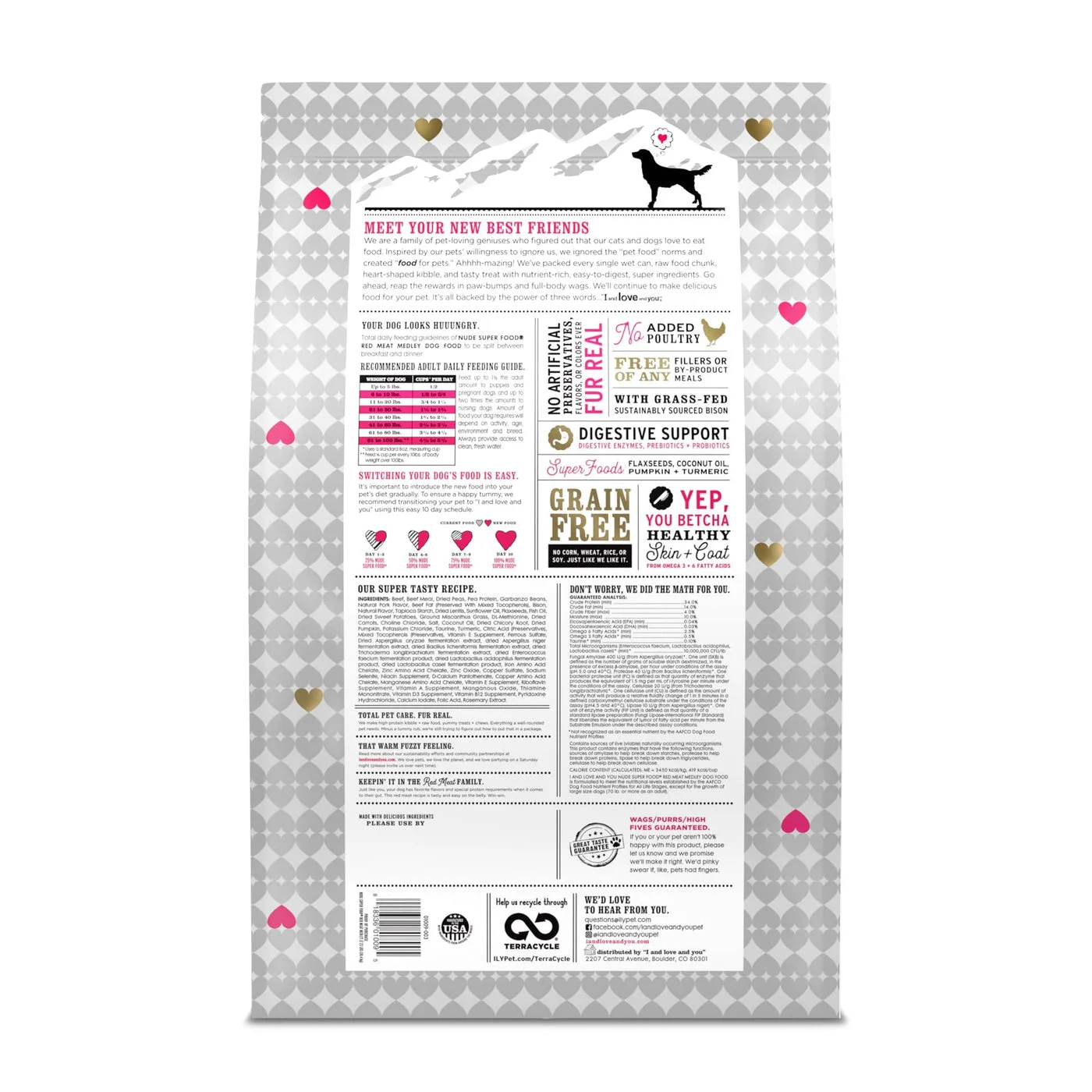
When people ask about ingredient list vs nutrition panel dog food, they’re usually trying to answer one bigger question: which part tells the truth? The honest answer is both do, but they tell different truths.
The ingredient list tells you what went into the recipe. The nutrition panel or guaranteed analysis tells you how the final food is represented nutritionally. You need both. Using only one is how smart shoppers still make bad picks.
In the ingredient list, we’d look for a few things first:
-
a clearly named animal protein source
-
recognizable ingredients you can identify without needing a glossary
-
a simpler formula if your dog has a sensitive stomach
-
alignment between the front-of-bag story and what’s actually in the food
If the bag leads with lamb but the formula reads like a crowded list built around everything except lamb, slow down. Front-of-bag storytelling is cheap. Formula clarity is harder to fake.
The ingredient list also gives useful clues about likely triggers, fiber sources, and how the recipe was built. But it does not prove digestibility. It does not tell you how much of those nutrients your dog can actually use.
That’s where the nutrition side helps. Protein, fat, fiber, moisture, and calories give you a more measurable view of the food. A high-protein claim may sound impressive, but if your dog gets loose stools, gas, or inconsistent appetite on that formula, the number alone did not help you.
Ingredients tell the story of the recipe. The nutrition panel tells the story of the nutrient profile. Read them together or don’t bother pretending you compared the food.
How to Read Guaranteed Analysis on Dog Food Without Overreading It
If you want to know how to read guaranteed analysis on dog food, start with restraint. This panel is useful, but people expect too much from it.
Guaranteed analysis usually lists minimums for some nutrients and maximums for others. That means it gives you a baseline, not a full nutritional biography.
The common line items matter:
-
Crude protein gives you a floor for protein level.
-
Crude fat helps you judge energy density and often relates to coat support.
-
Crude fiber offers one clue about digestive support, though not the whole story.
-
Moisture matters because it changes how foods compare across formats.
That last one is where a lot of label comparisons go sideways. Comparing dry food to a much wetter format without context leads to bad conclusions fast. Compare like with like when you can, especially dry against dry.
Also, guaranteed analysis does not tell you ingredient quality, amino acid balance, digestibility, or how gently the food was processed. Two foods can post similar numbers and perform very differently in the dog standing in your kitchen.
Calories matter more than many people think. Two dry foods can look close on protein and fat, but one may feed much richer than the other. That changes portion size, weight stability, stool quality, and even whether your dog feels settled between meals.
Higher numbers are not automatically better.
The right balance depends on age, activity, size, and digestive resilience. A very active dog and a sensitive senior are not reading the same label for the same reasons, and neither should you.
The Most Important Line Many Dog Owners Miss: Nutritional Adequacy
If there’s one line we wish more people would check first, it’s the nutritional adequacy statement. This is one of the most important parts of understanding pet food labels because it tells you whether the food is meant to meet daily nutritional needs.
That matters a lot more than artisan packaging.
A food intended as a full daily diet is not the same thing as a treat, topper, or supplemental product. Plenty of good-looking foods blur that line. Owners fill bowls with them anyway, then wonder why things feel a bit off after a few weeks. Not a crisis. Just a quiet mismatch.
Pay attention to whether the food is positioned for:
-
adult maintenance
-
growth
-
all life stages
-
occasional or supplemental feeding
A 2026 laboratory analysis of 50 commercially available puppy foods in South Korea found that nutrient shortfalls were most common for EPA plus DHA: 72% of sampled puppy foods were below the study’s recommended level. The same analysis found shortfalls in phosphorus and calcium, plus calcium-to-phosphorus imbalances. This does not describe every market or brand, but it shows why a growth claim deserves more scrutiny than front-of-bag ingredient language alone.
Across the study’s full 96-product dog-and-cat sample, 82.3% met label-declared guaranteed-analysis values for the seven mandatory nutrients assessed. That is a useful reminder of the boundary of a guaranteed analysis: it covers selected nutrients, not every nutrient or balance that may matter for a growing dog.
“All life stages” can be useful, but broader isn’t always better for every dog. Sometimes a more targeted fit is the smarter call, especially for puppies or older dogs with narrower needs.
Feeding directions belong in this conversation too. Use them as a starting point, not a rule. Your dog’s body condition, appetite, stool quality, and energy level should shape the final portion. The label can start the conversation. Your dog finishes it.
Newer label formats make intended use easier to find, which is a good change. Frankly, it should never have been hard to figure out whether a bag is actual daily food.
To go deeper on two of these comparison points, read our guides to protein digestibility and cold-pressed dog food.
What the Label Does Not Fully Tell You: Why Processing Matters
A strong label still doesn’t tell the whole story. You also need to know how the food was made.
There’s a difference between what’s in the formula and what happens to those ingredients during production. That’s not a minor detail, especially with dry food.
Gentler processing can help preserve natural flavor, nutrient integrity, and digestibility. For dogs with sensitive stomachs, that can show up in very ordinary but important ways: firmer stools, less gas, steadier appetite, fewer "why is this food not sitting right?" moments. Those are not glamorous metrics. They’re still the ones we care about.
This matters even more when you remember where gut health sits in the bigger picture. A large share of immune activity is centered in the gut. So digestibility and nutrient absorption are not side issues. They’re central.
That’s one reason we built our Cold-Pressed Dog Food collection around lower-temperature production. Our recipes are made at 3x lower temperatures than traditional kibble and use real meat, fruits, and vegetables in four single-protein options: lamb, chicken, salmon, and beef. We like labels that are readable, but we also care what happened before the bag was sealed.
Still, process is not a free pass. A gentler method should be judged alongside ingredient clarity, nutritional adequacy, and how your dog does on the food. Process matters. So does proof in the bowl.
What to Look for in Dog Food Based on Your Dog’s Actual Needs
This is where label reading stops being academic. If you’re wondering what to look for in dog food, the answer depends on the dog in front of you, not the trend of the month.
For digestive sensitivity, we’d keep it simple. Look for a clearly named protein source, recognizable ingredients, and a formula that doesn’t feel overcrowded. Watch fiber sources, then watch the stool for two to three weeks. The stool is feedback, not an awkward side note.
For loose stool or gassiness, focus less on trendy ingredients and more on digestibility, consistency, and how the food performs day after day. A formula that looks exciting but creates chaos in the yard is not a health food for that dog.
For skin and coat concerns, check both protein source and fat profile. Fish-based formulas can make sense here. Our All-Natural Salmon Recipe is one example owners often compare when they want a fish-first option tied to coat comfort and appearance, not just a flashy "omega" headline.
For dogs that need gentler digestion, a lamb-based formula can be a practical place to look. Our All-Natural Lamb Recipe fits that conversation because it keeps the protein source clear and is often the kind of option careful owners want to compare when stomach comfort is high on the list.
For active or lean dogs, don’t chase protein alone. Check calories and the balance of protein and fat. For aging dogs, look hard at digestibility, ingredient clarity, and nutrient density. Bigger portions of a harder-to-use food don’t solve much.
The right food is not the one with the loudest claims. It’s the one whose label and real-life results make sense together.
Red Flags That Deserve a Second Look
Not every confusing label is a bad one. Some are just cluttered. Still, there are patterns that should make you pause.
A few worth watching:
-
heavy lifestyle language with very little clarity about intended use
-
beautiful ingredient storytelling without a clear complete-and-balanced position
-
disease-style promises from an everyday food
-
front-of-bag claims that don’t match the ingredient list or analysis
-
weak feeding guidance or vague company information
We’d also be careful with labels that try to manufacture panic. If a product page spends more time scaring you than explaining the food, that tells you something. Usually not something good.
Vague quality terms are fine as decoration. They are not fine as substance.
And yes, online product pages deserve the same scrutiny as a physical bag. Digital claims are still part of the labeling environment, and sometimes they get even looser there.
You don’t need to become cynical. Just harder to impress.
You can apply the same label-reading questions to our personalized subscription comparison and recurring delivery guide.
A Dog Food Comparison Guide You Can Actually Use
Most comparison advice gets too abstract too fast. A usable dog food comparison guide should work in a store aisle, on your phone, or with two bags on the counter.
Use this order every time:
Compare like with like. Dry food against dry food. Similar use cases against similar use cases. Otherwise the numbers mislead you.
It also helps to set two or three non-negotiables before you shop, such as:
-
complete daily nutrition
-
single-protein preference
-
support for stool quality or skin comfort
-
easier digestion than standard kibble
If you’re unsure which protein fits best, use a smaller format first. That makes comparison more honest. Our Trial Variety Pack is useful for exactly that reason. It lets you test preference and tolerance across chicken, beef, lamb, and salmon before committing to a larger bag.
One practical note here: transition slowly, especially if your dog has a sensitive stomach. Good food introduced too fast can still create a mess.
The best comparison guide is the one that ends with real-world observation. The label gets a food onto your shortlist. Your dog makes the final cut.
Conclusion
Understanding pet food labels gets much easier once you stop treating the bag like a sales pitch and start treating it like a tool. That shift changes everything.
Start with intended use and life stage. Read the ingredient list and nutrition panel together. Know what guaranteed analysis can tell you, and what it can’t. Pay attention to processing, because how food is made can affect digestibility and nutrient retention in ways the front of the bag will never explain.
Then watch your dog.
That’s the part people skip. The right label should line up with the right response: steadier digestion, better stool quality, healthy weight, consistent energy, and a coat that looks like the food is doing its job.
Pick up your current bag and read it again in the order we covered. Front panel. Intended use. Life stage. Ingredients. Analysis. Adequacy. Feeding directions. Then ask one more question: how was this food actually made?
If you want a gentler dry food option, compare what you’re feeding now against a lower-temperature cold-pressed recipe and use what you know now, not what the packaging wants you to feel. That’s a better place to make decisions from.